How Poor Oral Hygiene Leads to Gum Disease Treatment Needs
Most people do not wake up one morning with advanced gum disease. It builds quietly, often without much pain, and that is part of what makes it so common. A little bleeding when brushing gets ignored. Flossing feels uncomfortable, so it happens less often. A cleaning gets postponed. Months turn into years, and what started as a thin film of plaque along the gumline begins to damage the tissue and bone that support the teeth.
That slow progression is the reason so many adults eventually need some form of Gum Disease Treatment. Poor oral hygiene does not just make teeth look less clean. It changes the biology of the mouth. Bacteria multiply, inflammation becomes persistent, the gums pull away from the teeth, and the supporting structures start to weaken. By the time symptoms feel obvious, the disease is often well established.
Understanding how this happens matters because gum disease is far easier to prevent than to reverse. Once bone loss occurs, dental care shifts from simple maintenance to active treatment, sometimes over many visits. The difference between those two paths often comes down to what happens at home every day.
The mouth changes fast when plaque is left alone
A clean tooth surface does not stay clean for long. Within hours after brushing, a soft, sticky biofilm begins to form again. That film, called plaque, contains bacteria, food debris, and proteins from saliva. In small amounts, plaque is expected. The problem starts when it is not disrupted regularly.
When plaque sits along the gumline, bacteria use sugars and other nutrients to thrive. Some bacterial species are relatively harmless, but as plaque matures and oxygen levels shift under the gums, more aggressive organisms can take hold. These bacteria release toxins and trigger the immune system. The gums respond with inflammation, which is why they begin to look red, swollen, or shiny instead of pale pink and firm.
At this stage, the condition is called gingivitis. It is the earliest form of gum disease, and it is usually reversible. The gums may bleed during brushing or flossing, and many people wrongly assume that bleeding means they should avoid cleaning that area. In practice, the opposite is usually true. Healthy gums generally do not bleed during gentle brushing and flossing. Bleeding is often a sign that plaque has been allowed to remain in place long enough to irritate the tissue.
I have seen this pattern countless times in routine dental settings. A patient says, almost apologetically, "I stopped flossing because it made my gums bleed." A few months later, the gums are even more inflamed, and now there is tartar buildup as well. The body is already signaling that something is wrong, but the signal gets misunderstood.
Why gingivitis turns into periodontitis
If poor oral hygiene continues, plaque hardens into tartar, also called calculus. Tartar cannot be brushed away at home. It creates a rough surface that attracts even more plaque, especially around and below the gumline. At that point, the irritation becomes deeper and more chronic.
This is where gingivitis can progress to periodontitis, which is a more serious form of gum disease. In periodontitis, the attachment between the gums and teeth begins to break down. Small spaces, known as periodontal pockets, form between the tooth and the gum tissue. These pockets trap bacteria and make home cleaning much harder. It becomes a self-reinforcing cycle. More bacteria lead to more inflammation, and more inflammation leads to deeper pockets and more tissue damage.
What surprises many people is that the destruction is not caused only by bacteria. The body’s own inflammatory response plays a major role. The immune system is trying to fight infection, but in doing so it can also damage connective tissue and bone. That is why untreated gum disease can eventually lead to loose teeth, shifting teeth, gum recession, bad breath, chewing discomfort, and tooth loss.
Once periodontitis is present, routine brushing and occasional flossing are no longer enough to solve the problem. This is the point where Gum Disease Treatment becomes necessary, often starting with professional deep cleaning and, in more advanced cases, extending to surgical care or long-term periodontal maintenance.
The daily habits that set the stage
Poor oral hygiene is not always dramatic neglect. More often, it is a collection of small gaps repeated consistently. Brushing for 20 seconds instead of two minutes. Skipping nighttime brushing. Never cleaning between the teeth. Waiting a year or two between professional cleanings. Using a toothbrush with splayed bristles long past its useful life. None of these habits seems catastrophic on its own, but together they create the conditions gum disease needs.
Several patterns tend to show up again and again in people who end up needing Gum Disease Treatment:
- Inconsistent brushing, especially at night
- Little or no interdental cleaning, whether floss, picks, or water flossers
- Long gaps between dental visits
- Heavy plaque retention around crowded teeth, old dental work, or partially erupted molars
- Ignoring early warning signs such as bleeding, tenderness, or persistent bad breath
The nighttime issue deserves special attention. Saliva flow decreases during sleep, and saliva helps buffer acids and wash away debris. If plaque and food remain on the teeth overnight, the mouth has fewer natural defenses. That makes bedtime brushing one of the most protective habits in oral care.
Interdental cleaning matters for the same reason. A toothbrush does not clean the contact area between most teeth very well. Those sheltered spaces are ideal for plaque accumulation and gum inflammation. Someone can brush thoroughly twice a day and still develop localized gum disease if they never clean between the teeth.
Early signs are easy to minimize
One reason gum disease becomes advanced before treatment starts is that the early signs are easy to rationalize. Many people assume bleeding gums are normal. Others think bad breath comes only from food or stomach issues. Gum recession gets blamed on brushing too hard, which can contribute in some cases, but often the recession is tied to inflammation or loss of support.
Pain is not a reliable marker in gum disease. Cavities often hurt earlier than periodontal problems do, so patients may judge urgency by discomfort and miss the bigger threat. I have seen mouths with substantial pocketing and bone loss in people who report very little pain. Their main complaint might be "my teeth feel longer" or "food keeps getting stuck."
Common warning signs include bleeding during brushing, puffy gums, bad breath that returns quickly after cleaning, tenderness along the gumline, new spaces between teeth, and teeth that feel slightly mobile. None of these signs should be brushed off, especially if they persist for more than a week or two despite better home care.
There is also an important edge case here. Not every person with gum disease shows dramatic redness or obvious swelling. Smokers, for example, may have less visible bleeding because nicotine affects blood flow. The disease can still be active, but the usual visual cues are muted. That makes regular professional exams even more important for people who smoke or use gum disease laser treatment nicotine products.
What dentists and hygienists are actually looking for
When a patient comes in with suspected gum disease, the dental team is not just checking whether the gums look inflamed. They are measuring attachment loss and trying to understand how far the condition has progressed.
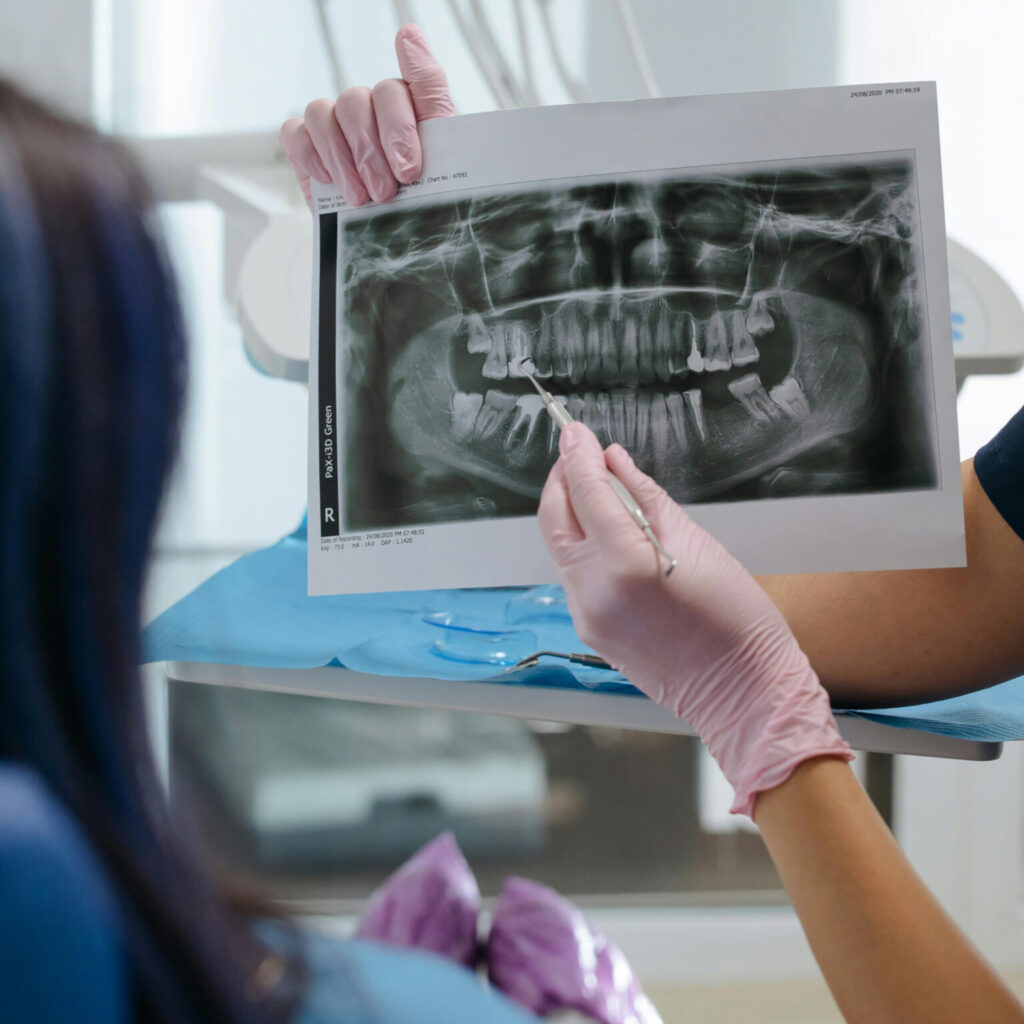
A periodontal probe is used to measure pocket depths around each tooth. Shallow readings are generally easier to maintain and are often seen in healthy mouths or mild gingivitis. Deeper readings suggest that the gum attachment has been compromised. X-rays help reveal bone levels and areas where the supporting structures have receded. Bleeding points, tartar deposits, recession patterns, and tooth mobility all add to the picture.
This is why two people can have similar amounts of visible plaque yet need different care. One person may have reversible gingivitis. Another may already have several deep pockets and early bone loss. Gum disease is not judged by appearance alone.
There is also clinical judgment involved. A person with diabetes that is poorly controlled, dry mouth from medications, a history of periodontal disease, or limited dexterity may need closer monitoring even if the disease appears mild at the moment. Oral health never exists in isolation from the rest of the body or from daily reality.
How poor oral hygiene turns into treatment, not just advice
Many patients hope the fix will be "brush better and come back in six months." If the issue is true gingivitis, that may be enough along with a professional cleaning. But once periodontitis develops, treatment becomes more involved.
The first line of Gum Disease Treatment is often scaling and root planing, commonly called deep cleaning. This is not the same as a routine prophylaxis. The goal is to remove plaque, tartar, and bacterial toxins from below the gumline and smooth the root surfaces so the gum tissue has a better chance to reattach. Depending on the extent of disease, the mouth may be treated by quadrant over multiple visits, often with local anesthetic for comfort.
After deep cleaning, the gums are reevaluated. Some pockets shrink significantly if the patient improves home care and the bacterial burden drops. Other areas remain deep or continue to bleed, which may lead to referral to a periodontist. More advanced Gum Disease Treatment can include localized antibiotic therapy, surgical pocket reduction, gum grafting in cases of recession, or regenerative procedures where the anatomy and defect pattern make them worthwhile.
Here is where expectations matter. Treatment can stop active disease and stabilize the mouth, but it does not always restore tissues to their original state. Lost bone usually does not simply grow back on its own. Receded gum tissue does not predictably return without specific procedures. That is why prevention and early intervention are so valuable.
Home care after treatment is where success or failure happens
Professional care can remove the deposits you cannot reach, but it cannot replace daily maintenance. After Gum Disease Treatment, the mouth becomes a long-term management case rather than a set-it-and-forget-it situation. Patients who do well are usually the ones who understand that periodontal stability depends on consistency, not intensity.
The basics remain straightforward, but the details matter. A soft-bristled electric toothbrush often helps because it improves coverage and timing. Interdental cleaning has to match the anatomy. Some people do well with traditional floss. Others need interdental brushes because the spaces are wider after bone loss or gum recession. Water flossers can be useful, especially around bridges, implants, and orthodontic appliances, though they work best as an addition rather than a total substitute in many cases.
The most practical post-treatment routine usually includes the following:
- Brush thoroughly twice daily, with special attention to the gumline
- Clean between the teeth every day using the tool that actually fits your mouth
- Keep periodontal maintenance appointments on the schedule recommended by your provider
- Report bleeding, swelling, or tooth mobility early rather than waiting
- Replace worn brushes and tips before they stop cleaning effectively
A common mistake is doing everything perfectly for two weeks after treatment, then slowly drifting back into old habits. Periodontal bacteria do not need a dramatic collapse in hygiene to return. They only need consistency to slip. Missing a day here and there is human. Missing most nights for several months is how relapse starts.
Why some people deteriorate faster than others
Poor oral hygiene is the central driver, but not everyone progresses at the same speed. Genetics, smoking, diabetes, stress, hormonal changes, medication-related dry mouth, and immune conditions can all affect how the gums respond to plaque. That does not mean the outcome is predetermined. It means the margin for error is smaller in some individuals.
Smoking is one of the clearest examples. Smokers often accumulate more plaque and tartar, heal less predictably, and can show less obvious bleeding despite more severe disease. The same amount of neglected plaque can produce more damage in a smoker than in a nonsmoker. Diabetes presents another strong link. When blood sugar is poorly controlled, inflammation tends to be higher and healing can be slower. The relationship goes both ways, with gum disease also making diabetic control harder in some cases.
Age plays a role too, but not in the simplistic sense people assume. Gum disease is not inevitable with age. What increases is cumulative exposure. More years of inconsistent hygiene, more restorations to clean around, more chances for recession, dry mouth, and systemic health changes. An older adult with meticulous care may have healthier gums than a younger adult who rarely flosses and misses appointments for years.
The cost of delay is rarely just financial
By the time advanced Gum Disease Treatment is needed, the burden is usually broader than the bill. There is time away from work, several appointments, lingering sensitivity, and the stress of hearing that teeth may have a guarded prognosis. Some patients notice they no longer bite into foods confidently. Others become self-conscious about bad breath or the appearance of receding gums. In severe cases, tooth loss leads to replacement decisions involving implants, bridges, or dentures, each with its own cost and maintenance demands.
There is also the frustration factor. People often say some version of, "If I had known bleeding gums mattered this much, I would have dealt with it sooner." That is an honest reaction. Gum disease tends to punish delay quietly, then all at once.
A useful way to frame it is this: routine oral hygiene is not just about keeping teeth white or preventing cavities. It is daily maintenance for the supporting foundation of the teeth. Once that foundation becomes unstable, care shifts from simple prevention to chronic management.
What prevention looks like in real life
Perfect habits are not required. Reliable habits are. Most people do not need a complicated routine, expensive gadgets, or a cabinet full of specialty products. They need a method they will actually follow every day.
For one patient, success might mean switching from manual brushing to an electric brush with a timer and using floss picks at night because traditional floss never became routine. For another, it might mean more frequent cleanings because crowded lower front teeth collect tartar quickly no matter how diligent home care is. For someone with arthritis, larger-handled tools or a water flosser may make all the difference. The best preventive plan is the one that respects both biology and real-life behavior.
Professional guidance matters because oral anatomy varies. Deep grooves, old crowns, bridges, implants, partial dentures, and orthodontic retainers all create different cleaning challenges. A generic lecture about brushing is less useful than specific instruction on where plaque is building in that individual mouth.
When those adjustments happen early, the need for Gum Disease Treatment often shrinks or disappears. When they do not, mild inflammation becomes a deeper structural problem.
The bottom line behind the diagnosis
Poor oral hygiene leads to gum disease because bacteria are allowed to remain where the gum tissue is most vulnerable. At first, the damage is superficial and reversible. With time, it becomes deeper, affecting attachment and bone. That transition is what turns a preventable condition into one that requires active Gum Disease Treatment.
The good news is that the process is not mysterious. Bleeding gums, tartar buildup, bad breath, and neglected cleanings are not random events. They are clues. When they are addressed early, gum health often rebounds. When they are ignored, treatment becomes more complex and the results more limited.
Most severe periodontal problems do not begin with catastrophe. They begin with ordinary habits left uncorrected for too long. That is exactly why daily care matters so much, and why even small improvements made consistently can change the long-term outcome of the mouth.
Dental Group Of Beverly Hills
Address: 8641 Wilshire Blvd #125, Beverly Hills, CA 90211
Phone number: +13109296335
FAQ About Gum Disease Treatment
How to improve gum health quickly?
To improve gum health quickly, eliminate plaque buildup by brushing for two full minutes twice a day at a 45-degree angle to the gumline. Floss daily to clean under the gumline, and rinse with an antimicrobial, alcohol-free mouthwash. For immediate relief of soreness, use a warm saltwater rinse.
What is the fastest way to cure gum disease?
To quickly cure early-stage gum disease (gingivitis), eliminate the plaque buildup causing the inflammation. Brush gently but thoroughly for two minutes twice daily, floss daily, and use an antibacterial mouthwash or a warm saltwater rinse. However, if tartar has hardened, professional treatment is necessary.
How do I treat my gum disease at home?
You can treat early gum disease at home by practicing strict daily oral hygiene, rinsing with salt water or antibacterial mouthwash, and quitting smoking. True gum disease (especially advanced forms like periodontitis) cannot be fully cured at home once tartar forms, and you must see a dentist for professional cleanings.